ABS – Acrylonitrile Butadiene Styrene
ABS is a copolymer in which styrene forms the primary component. The material offers a well-balanced combination of mechanical and chemical properties and is particularly suitable for vacuum forming and thermoforming applications. ABS is widely used in both industrial and consumer products due to its toughness, ease of processing and attractive surface finish.
Chemical Designation
Acrylonitrile Butadiene Styrene
Abbreviation
ABS
Natural Color and Additives
- Milky white
- Light brown
Available Forms
- Sheets
- Rods
- Hollow bars
Key Properties
- Good low-temperature performance
- Excellent vacuum-forming and thermoforming characteristics
- Low mould shrinkage
- Good resistance to water, inorganic salts, alkalis and selected acids
- Can be electroplated and chrome plated
- Good impact resistance
- Easy to machine and fabricate
- Good dimensional stability
- Attractive surface finish
Typical Applications
ABS is widely used in:
- Marine applications
- Refrigeration equipment
- Machinery and equipment covers
- Consumer products
- Automotive components
- Furniture manufacturing
- Office equipment
- Protective equipment
- Thermoformed products
Typical Products
- Small boats and marine components
- Refrigerator liners
- Equipment housings and covers
- Safety helmets
- Toys
- Kitchen appliances
- Office machines
- Automotive body components
- Furniture components
- Cases and luggage
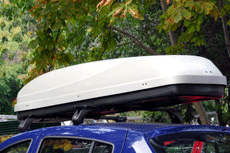
- Automotive roof boxes
Typical Benefits
- Excellent balance of toughness and rigidity
- Well suited for thermoforming processes
- Good surface appearance
- Easy to machine and finish
- Available for decorative surface treatments such as chrome plating
- Cost-effective engineering material for a wide range of applications
Considerations
ABS provides good impact resistance and manufacturing flexibility but is generally less resistant to prolonged UV exposure and harsh outdoor environments than some specialized engineering plastics. UV-stabilized grades may be preferred for outdoor applications.